
ProVisu. Trustworthy Internet documents on vision disorders, eye diseases and the prevention of blindness. Home
<< Back
   Click here to disabled the audio version
All diseases: [Alt+ A B C D E F G H I J K L M N O P Q R S T U V W X Y Z ]

Trachoma

Generality/Definition
  • Listen / Stop:
    Trachoma is the leading infectious cause of ocular morbidity. This disease is a chronic keratoconjunctivitis caused by the obligate intracellular bacterium Chlamydia trachomatis. Repeated episodes of reinfection within the family cause chronic follicular or intense conjunctival inflammation (active trachoma), which leads to tarsal conjunctival scarring. The scarring distorts the upper tarsal plate and, in some individuals, leads to entropion and trichiasis (cicatricial trachoma). The end result includes corneal abrasions; corneal scarring and opacification; and, ultimately, blindness.
    Source: Trachoma (emedicine.com)

Epidemiology

  • Listen / Stop:
    Trachoma affects about 84 million people of whom about 8 million are visually impaired. It was once endemic in most countries. It is responsible, at present, for more than 3% of the world's blindness but the number keeps changing due to the effect of socio-economic development and current control programmes for this disease. In spite of this, trachoma continues to be hyperendemic in many of the poorest and most remote poor rural areas of Africa, Asia, Central and South America , Australia and the Middle East. The sequellae of active trachoma appear in young adulthood and in middle-aged persons. In hyperendemic areas active disease is most common in pre-school children with prevalence rates as high as 60-90%. It often strikes the most vulnerable members of communities--women and children. Adult women are at much greater risk of developing the blinding complication of trachoma than are adult men. This increased risk has been explained by the fact that women generally spend a greater time in close contact with small children, who are the main reservoir of infection.
    Source: WHO | VISION 2020 priority eye diseases (v2020.org)
       Other information: Open - Close

Prevention

  • Listen / Stop:
    Environmental risk factors are water shortage, flies, poor hygiene conditions, and crowded households. A prolonged exposure to infection throughout childhood and young adulthood appears to be necessary to produce the complications seen in later life. A single episode of acute Chlamydial conjunctivitis is not considered sight threatening as there is virtually no risk of prolonged inflammation or blinding complications.
    Source: WHO | VISION 2020 priority eye diseases (v2020.org)

Symptoms

  • Listen / Stop:
    The early symptoms of trachoma include the development of follicles (small sacs) on the conjunctivae of the upper eyelids, pain, swollen eyelids, a discharge, tearing, and sensitivity to light. If the infection is not treated, the follicles develop into large yellow or gray pimples, and small blood vessels develop inside the cornea. In most cases, both eyes are infected. Repeated infections eventually lead to contraction and turning-in of the eyelids, scarring of the corneas and conjunctivae, eventual blockage of the tear ducts, and blindness.
    Source: Trachoma (healthatoz.com)

Diagnosis

  • Listen / Stop:
    Diagnosis is based on a combination of the patient's history (especially living or traveling in areas with high rates of trachoma) and examination of the eyes. The doctor will look for the presence of follicles or scarring. He or she will take a small sample of cells from the patient's conjunctivae and examine them, following a procedure called Giemsa staining, to confirm the diagnosis.
    Source: Trachoma (healthatoz.com)
       Other information: Open - Close

Treatment

  • Listen / Stop:
    Treatment of early-stage trachoma consists of four to six weeks of antibiotic treatment with tetracycline, erythromycin, or sulfonamides. Antibiotics should be given without waiting for laboratory test results. Treatment may combine oral medication with antibiotic ointment applied directly to the eyes. A single-dose treatment with azithromycin is an alternative method. Tetracyclines should not be given to pregnant women or children below the age of seven years. Patients with complications from untreated or repeated infections are treated surgically. Surgery can be used for corneal transplantation or to correct eyelid deformities.
    Source: Trachoma (healthatoz.com)

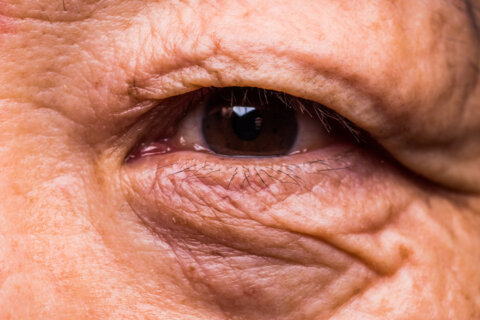
Illustrations

Source: Trachauma (eyeatlas.com)


Trachoma: lid scars

Scientific articles: All recent articles for "Trachoma"

Clinical trials for "Trachoma":

Search Web pages:
[ Cette page en français ] [ Esta página en español ]
What do you think of this site
Vocalization by ReadSpeaker
Last modified: Mar 2007
This website is accredited by Health On the Net Foundation. Click to verify. We comply with the HONcode standard for trustworthy health information: verify here.