
Generality/Definition
-
Listen /
Stop:
Hyperopia, commonly referred to as farsightedness, is an error of refraction (EOR) in which an individual may not have any difficulty seeing objects that are distant but may have problems focusing on objects that are near. In some instances, farsighted individuals can see all objects clearly, but they notice the need to strain the eyes, albeit unnecessarily, to maintain focus. This type of EOR occurs when the eyeball is too short or when the cornea is too flat. In hyperopia, rays of light focus behind the retina instead of on it. This results in poor vision because the focus of light is not directly on the retina where it should be for normal vision. This anatomical structure induces a constant physiologic attempt to make up for the problem and to focus images. Farsightedness (hyperopia) is often confused with presbyopia, which is a normal development of the aging process. Presbyopia occurs when the lens inside the eye loses flexibility, thereby preventing accurate focusing on nearby objects. This condition is common in individuals by the age of 40 years, and all persons older than 50 years experience presbyopia.
Source: Hyperopia, Conductive Keratoplasty (emedicine.com)
Epidemiology
-
Listen /
Stop:
Although numerous figures are reported in publications, the exact number of hyperopes in the world is unknown. Generally, hyperopia is believed to affect millions of persons in the United States and hundreds of millions of individuals around the world. Of those individuals older than 50 years, 100% of them need corrective lenses for presbyopia.
Source: Hyperopia, Conductive Keratoplasty (emedicine.com)
Symptoms
Diagnosis
-
Listen /
Stop:
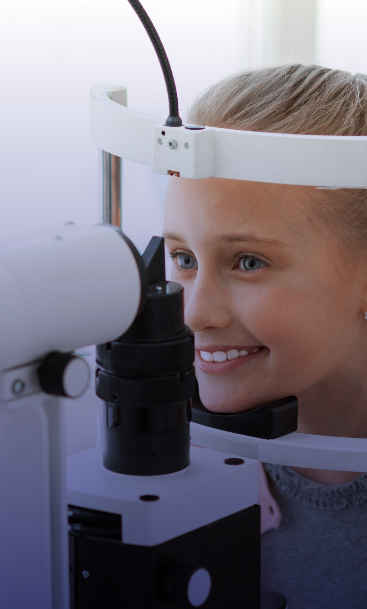
Because it is possible to have good visual acuity with some degree of hyperopia it is important to relax accommodation before the eye exam. This is done with the use of eyedrops and is called a cycloplegic exam or cycloplegic refraction. The drops relax the accommodation (thus making reading blurry until the drops wear off). Patients will usually be asked to have someone drive them home because of the blurriness. The doctor can then determine the patient's visual status with a hand-held instrument called a retinoscope and/or have the patient read from an eye chart while placing different lenses in front of the patient's eyes. Refractive error is measured in units called diopters (D).
Source: Hyperopia (healthatoz.com)
Treatment
-
Listen /
Stop:
Although nonsurgical correction (ie, glasses, contact lenses) for patients with low-level hyperopia and presbyopia has been widely successful throughout the world, the surgical correctional procedures have been somewhat less accepted. (See History of the Procedure.) Conductive keratoplasty (CK), an advanced method for vision correction using controlled-release radiofrequency energy to gently reshape the cornea and to provide long-lasting vision correction, is now available for these patients.
Source: Hyperopia, Conductive Keratoplasty (emedicine.com)
Other information:
Open -
Close
-
Listen /
Stop:
The usual treatment for hyperopia is corrective lenses (spectacles or contact lenses). Different surgical methods to correct hyperopia are under investigation. One approach is to implant corrective contact lenses behind the patient's iris. The first experimental implantable contact lenses were implanted in 1997. Another approach is to surgically increase the curvature of the eye's existing cornea or lens. Although there have been many reports of success using different kinds of lasers to increase corneal curvature, as of 1998 there are still problems with stability and predictability. The introduction of light-activated biologic tissue glue in 1997 holds promise for improvements in those areas.
Source: Hyperopia (healthatoz.com)
|
Scientific articles:
All recent articles for "Hyperopia"
Clinical trials for "Hyperopia":
|